
About the Course
How can Jewish educators invite meaningful conversations about God into the classroom when they themselves – and their students – may hold diverse beliefs, questions, and uncertainties? The starting point of this unique professional development fellowship experience for Jewish day school educators is that teaching about God is not about transmitting a single doctrine, but about opening structured space for learners to encounter, question, and articulate meaning within a framework of Torah values. To that end, this six-part program is an immersion in multiple Jewish “languages of the Divine,” including deep Jewish textual study and diverse theological frameworks. Simultaneously, you will build a robust pedagogical toolbox to bring these concepts down to earth, including experiential learning strategies, structured discussion tools, and reflective practices. Closed Captioning will be available for this course. DATES: Tuesdays, Oct. 27, Nov. 3, 10, 17, 24, Dec. 1, 2026 TIME: 9:00–10:15 AM Pacific / 12:00–1:15 PM Eastern / 4:00–5:15 PM UK / 6:00–7:15 PM Israel Note: Due to seasonal clock changes, sessions starting from Nov. 3rd will take place at 9:00–10:15 AM Pacific / 12:00–1:15 PM Eastern / 5:00–6:15 PM UK / 7:00–8:15 PM Israel
Navigate God-Talk Confidently
Develop greater comfort facilitating conversations about God, belief, ambiguity, and spiritual experience – without needing to provide a single theological answer or doctrine.
Explore Diverse Theologies
Encounter biblical, rabbinic, philosophical, mystical, and modern approaches to God, and consider how different theological frameworks can open different possibilities for learners.
Bring Ideas to Practice
Translate theological ideas into an age-appropriate lesson, activity, or reflective practice adapted for your own Jewish studies classroom.

What to expect in this course:
Class style
Lecture + interactive discussion
Participation
Questions welcomed throughout
Source sheets and materials
Will be available in the Online Beit Midrash 24 hours in advance of the session Will be shared via a link in the chat during the class itself Will not be shown on-screen during the session
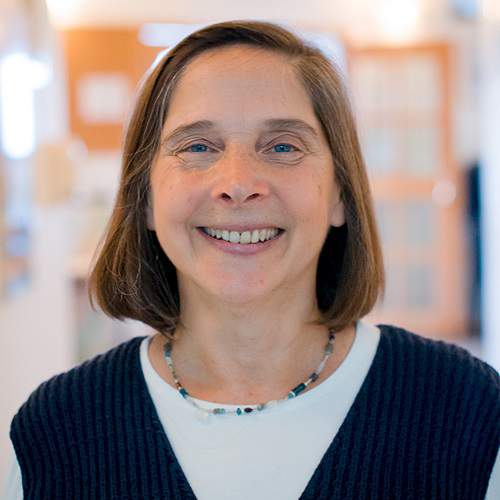
Meet Susan Yammer
Susan works for the Pardes Center for Jewish Educators. In that capacity, she serves as the co-director of Novice Teacher Support, pedagogy teacher as well as a teaching mentor for the current graduate students. Before making aliyah in 2007, she worked for more than 30 years as a classroom teacher, educational director and teaching mentor in Jewish Day Schools, afternoon Hebrew schools and summer camps in the United States. She has a Master’s degree in Jewish Education and is a recipient of the Grinspoon-Steinhardt Award for Excellence in Jewish Education.
Ready to bring God-talk into your classroom?
Enroll now to gain the confidence, frameworks, and practical tools to frame thoughtful and meaningful conversations about God with your students.
$50.00
More about this course
Talking about God can be one of the most meaningful parts of Jewish education – and one of the most challenging. How do we teach about God with intellectual honesty when our students bring different assumptions, beliefs, and doubts to the classroom? How can we remain grounded in Jewish tradition while making space for questioning, ambiguity, and personal meaning? This professional development fellowship will bring together a cohort of Jewish day school educators to explore meaningful, developmentally appropriate, and mission-aligned approaches to God-focused spiritual education. Participants will encounter the many ways Jewish tradition has spoken about the Divine, from biblical and rabbinic texts to philosophical, mystical, and contemporary theology. Rather than searching for a single Jewish answer to the question of God, we will consider how these different theological languages can help educators create richer and more nuanced classroom conversations. The course will also move from theology into practice. Sessions will model experiential strategies, structured discussion tools, havruta learning, reflective exercises, and other approaches that integrate intellectual exploration with emotion and lived experience. Participants will consider not only what they might teach about God, but how their own assumptions and comfort with God-language shape the learning environments they create. Throughout the fellowship, each participant will design or adapt a lesson, activity, or reflective structure for their own educational context. In the final collaborative workshop, participants will share their work, receive structured peer feedback, and leave with a toolkit of adaptable practices for bringing thoughtful, textually grounded, and spiritually meaningful conversations about God into the classroom.

Course outline
Session 1 - Opening the Conversation: Teacher Identity and Comfort with God Language
We will examine why God-talk is challenging in contemporary classrooms, map teacher assumptions and discomforts, and develop a reflective stance toward facilitating theological discussion. Includes spectrum-based activities and pedagogic framing tools for holding complexity in student conversations.
Session 2 - The Names of God: Language, Ambiguity, and Meaning-Making
We will study the textual sources of אהיה אשר אהיה alongside classical and modern interpretations (Rashi, Hirsch, Buber, Plaskow, Fox) and engage in personal translation exercises that highlight how Jewish tradition embeds openness and ambiguity at the heart of divine language.
Session 3 - Traditional Theism as a Classroom Framework
We will explore Tanakh, siddur language, and classical thinkers (e.g., Hirsch, Soloveitchik, Sacks) to map the traditional Jewish conception of God as personal, commanding, and covenantal, focusing on pedagogic strategies for presenting this paradigm with intellectual honesty and educational nuance.

Course outline
Session 4 - Expanding the Language of God: Alternative Theological Paradigms
We will compare frameworks such as process theology (Bradley Shavit Artson), panentheistic approaches (Kushner, Green), and religious naturalism (Kaplan), exploring how different theological models answer different human and educational questions.
Session 5 - Experiential Pedagogies of the Divine
We will model experiential approaches to teaching spirituality, including radical amazement (Heschel), metaphor-based learning, havruta structures for theological reflection, and brief contemplative or attention-based practices. Emphasis on integrating cognition, emotion, and lived experience in teaching about God.
Session 6 - Collaborative Classroom Workshop
All cohort participants will present their adapted classroom activity or lesson, receive structured peer feedback, and reflect on student engagement, theological framing, and pedagogic impact.
Questions?
Reach out to Reuven Margrett at [email protected]
Ready to bring God-talk into your classroom?
Enroll now to gain the confidence, frameworks, and practical tools to frame thoughtful and meaningful conversations about God with your students.
$50.00